

Climate Injustice – Book Review
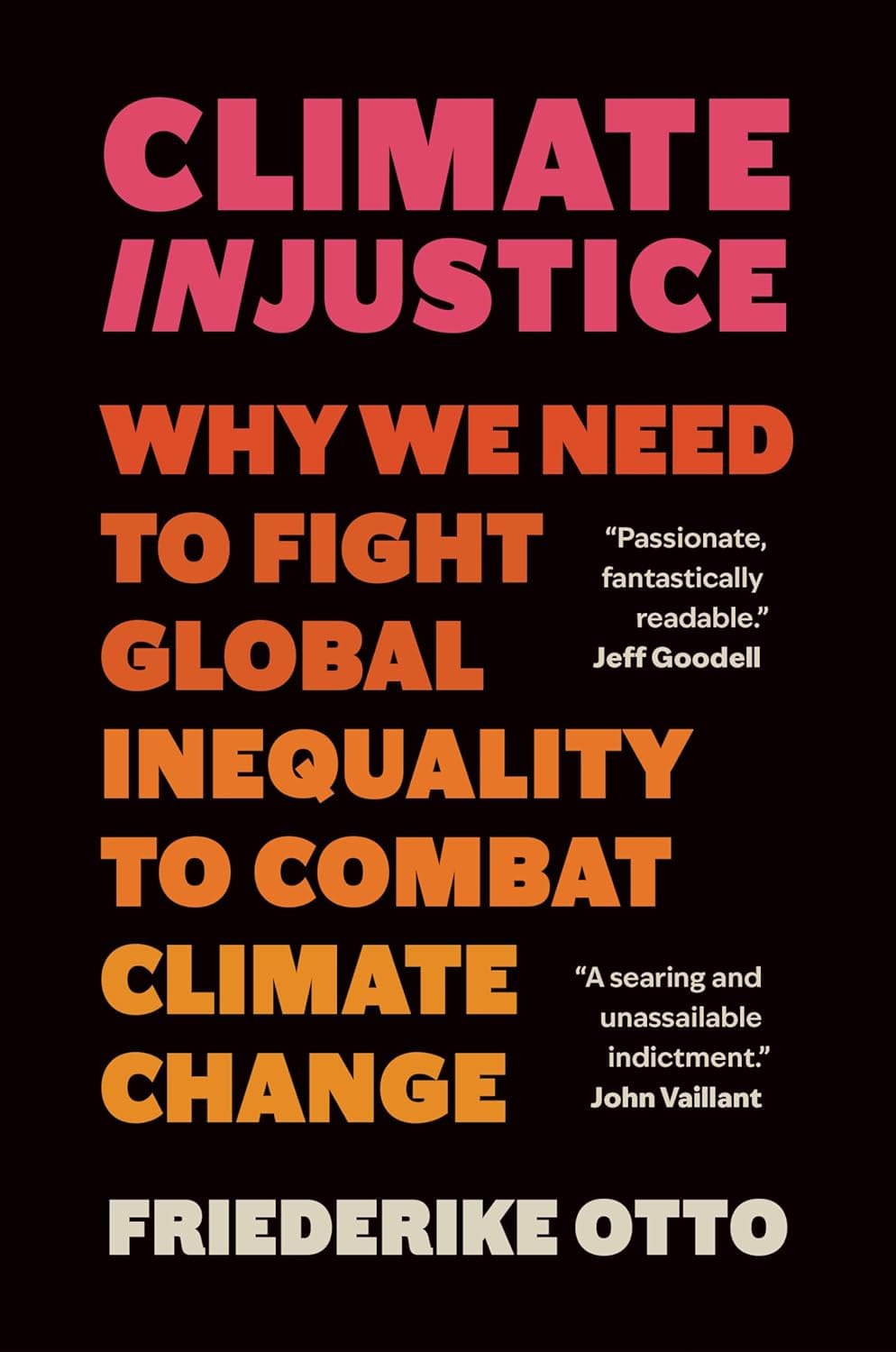
Climate Injustice: Why we need to fight global inequality to combat climate change, by Friederike Otto, translated by Sarah Pybus, April 2025. Greystone Books, ISBN: 9781778401626, 264 pages. RRP: £22 (hardback)
Friederike Otto is a leading climatologist and cofounder of the World Weather Attribution project, an academic collaboration calculating the impact of climate change on extreme weather events. This book, with its meticulous scientific credentials and deeply compassionate human stories, draws deeply on attribution research, but its central message is starker and more challenging. “Climate change isn’t an undeserved stroke of misfortune; above all else, it is injustice.” This injustice, she argues, does not necessarily imply obvious wrongdoing by any particular actor. Responsibility must be taken, but that need not include admissions of guilt or the casting of blame. The current crisis of justice did not originate with discernable climate change, but with the colonial, patriarchal, racist and extractivist narratives of what Otto terms the “colonial-fossil world”. But the impacts of global heating give it a new urgency, with climate injustices following and exacerbating the inequalities and oppressions of that preexisting reality.
Injustices include the ways in which climate impacts are monitored and reported and the exclusion of the majority world or Global South from research communities. Digital inequality is local as well as global, shutting people out from access to information, often with devastating consequences. The colonial-fossil world and its imperatives to profit and elite self-interest also determine strategies for addressing climate change, with measures focused on infrastructure and insurance instead of resilience; and narrowly upon mitigation, the measurable and competitive aspirations of net zero, with adaptation and loss and damage neglected and widely misunderstood.
As one of the world’s leading attribution experts, Otto writes with authority about the chains of causality, from emissions to particular weather events, that can in many cases now be traced and documented. There are, however, other factors often at play, and she argues that we need to recognise and name these, including government failures, colonial responsibilities and complex relationships between climate change, conflict and migration. Institutions, including states and NGOs, often lack reflection, failing to acknowledge their own colonialist and racist structures and relying on a “social superstructure narrative” which views climate change as a future problem largely avoidable by adaptation and the reduction of emissions, with dangerous reliance on technologies of carbon removal. The climate activist movement is not blameless either, with toxic tendencies to patriarchal domination, judgment of individual actions and unhelpful narratives about tipping points which induce fear and paralyse positive action.
For, she concludes, there is much that we can still do to shape our world in such a way that as few people as possible will suffer, unlearning patriarchy and racism, and telling a compelling and different story about how, together, we can live a good life. That narrative needs transformed ways for people to participate in social, political and economic life and decision-making. And it needs active creation. “Art” she writes, “is the opposite of deprivation, the thing we flee to process trauma, but also the place we go to to gain strength and understand more about humanity.” This book is itself a source of such strength and understanding, reminding us yet again that justice, as love in the public sphere, must be at the heart of our response to the climate crisis.
Tanya Jones
Comments on "Climate Injustice – Book Review"
No comments found.Add your own comment to "Climate Injustice – Book Review"
Next: Finding Beauty Behind Bars – Book Review
Previous: Promise the Earth – A Safe Climate in Good Faith – Book Review
Leave a Reply