

Genesis – Dominium or Service?
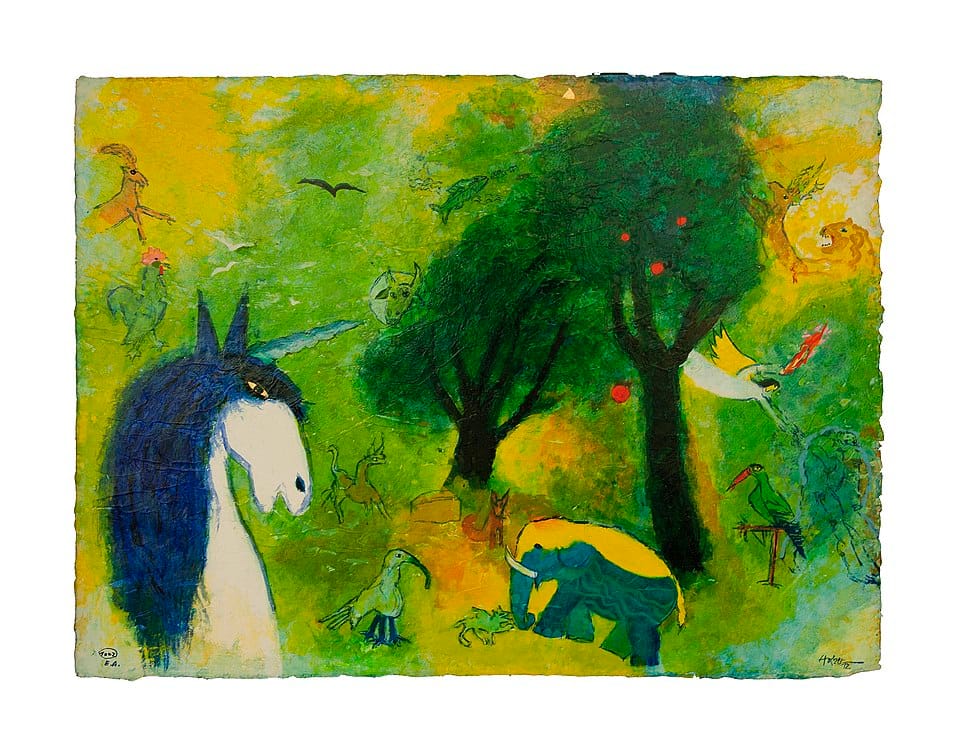
What is the role of humankind according to Genesis – to have dominion or to serve?
This chain of thought began when Catherine Fish asked in our members’ email group, CELink, “What does it mean to ‘serve Creation’?”
She asked,
Is it being actively involved in conservation? Is it to make habitats well and strong by removing pollutants and dominating plant species? What other examples are there? Or is it wider – to care and serve by resisting causes of climate change and working on reducing climate change, making relevant lifestyle choices?
Pasted below are members’ very enlightening responses.
Colin McCulloch replied,
The Genesis first chapter story speaks of ‘filling, subduing and having dominion’; the second chapter speaks of ‘tending and nurturing, or protecting’, the earth – if I read it correctly (I’m not a Hebrew scholar!). And doing this as image-of-God-bearers…
Our problem now, post Fall, is the brokenness of that image: dominion becomes domination, subduing becomes consuming… tending can become exploiting (eg. ‘agricultural improvement’: plants are well watered and nourished with fertilisers, but their yields are produced exploitatively, unsustainably).
Our knowledge of good and evil (primarily, evil) means we see the personal, selfish gains to be had from doing evil – and choose that, rather than service.
We need to actively learn and practice serving, following the way of Christ, enabled by grace. Grace releases us into freedom from ungodly desires, compulsive consumption and the fear of not having enough. Many of the OT rules about agriculture, Sabbath, Jubilee, letting land lie fallow, seem to teach practices which help to break those compulsions and insecurities, freeing us to serve others, human and non-human. We need to translate that Law into principles and practices for our own context, circumstances and capabilities, within the NT reality of Grace and being ‘in Christ, so new-creation’ people.
The Edenic vision (is being) restored: creation is waiting! (Romans 8:19-21)
Andii Bowsher added,
In Genesis 1, the word for dominion /rule over is radach (if memory serves). This is an awkward word at first sight because it really does mean ‘rule over’. However, I think responsible interpretation would hold it to its context since the ruling over is part of the image of God (image in ANE – Ancient Near Eastern – culture was about representing the one imaged – often a king). So, the question becomes, how does God want the ruling over to be enacted? Beneficially for all or selfishly – the clue is in the appraisal of God appreciating the teeming and the flourishing and calling it good. God-imaging rulers are surely to enhance and prosper that flourishing that God treasures.
The “serving” bit comes in the second creation story in Genesis 2. The words often translated of the “mission” of the Earthling (Adam was taken from the adamah – the earth; the play on words is always commented on) being there to “till and keep the earth” or similar. Well, it’s interesting that “till” translates the word “abad” which nearly everywhere else is translated “serve”. “Keep” is the word “shamar” which is also translated often as “guard”.
I usually think of serving the earth as working for its flourishing. I note that in so doing, in principle, we are engaging in a bit of enlightened self-interest since “of the dust of the earth” are we formed – and we know that we rely on the flourishing of the earth to continue to eat and breath.
I’m a Hebrew learner and have made a bit of a study of Genesis 1 -3 so I hope the above is of some help.
Bishop Laurie Green posted,

My own take on the Genesis creation stories is that they show us the way things are. We are rulers of creation because our brains enable us to take decisions which affect our environment. Other creatures affect the environment within which they live, but, as far as we can tell, without consciously determining whether what they do will have a positive or destructive impact on it.
This makes us a bit like hereditary monarchs. We are born to be rulers, whether we like it or not. We can, however, choose what kind of rulers we wish to be; tyrants, or servant kings and queens.
On a slightly different tack, I recently watched The Wolf Family and Me. I was struck by the way wolves which had not experienced persecution by humans showed caution, but not fear, when humans appeared in their territory. They were naturally inquisitive, which gave me an insight into the way they may have reacted to our hunter-gatherer ancestors. They may well have hung around human camps, and humans probably threw scraps of food to them, rather as we enjoy feeding the birds in our gardens or the ducks in the park today. Eventually they began accompanying humans on their hunts, which brought mutual benefits, and the process of domestication, or perhaps I should say, co-evolution, was under way. It was only when humans began farming that wolves became a threat to their livestock, and dogs and wolves, “man’s best friend” or “the big, bad, wolf” became separate animal groupings.
Now we are recognising that we have a responsibility towards both; not to selectively breed dogs which suit our whims but are subject to congenital weaknesses and diseases, and not to persecute wolves in the wild places still available to them.
John Barnett said,
We’ve also got to reckon with the fact that the two creation stories in Genesis derive from totally different milieu, the first from the exiled priestly hierarchy who want order and restoration of their elite position in society, and the second from what we usually term the J source which is much more homely and relational.
Because of this we shouldn’t be surprised if the Hebrew in the first story is at odds with the words in the second story. The first speaks of domineering – as elsewhere like Psalm 8, which speaks of the glories of “man” against the other elements of creation which have been “put under our feet” – no gentle caring much implied there.
The caring and tilling of the second story comes from that homely relational source J and makes wonderful sense to the Christian reader – but we shouldn’t then seek to interpret the original meaning of the first in the light of the second. We might want to amalgamate the two just to keep our modern-day senses at ease, but let’s be honest about the harshness of the first and the elitist caste from which it came. We’ve got to remember we’re dealing with harsh predatory environments here and also that as Christians we don’t have to go along with every word of the Hebrew scriptures anyway since they’ve been totally reinterpreted in the light of Christ.
Just writing about this as a matter of fact. Loads of love to all.
Andii Bowsher also posted:
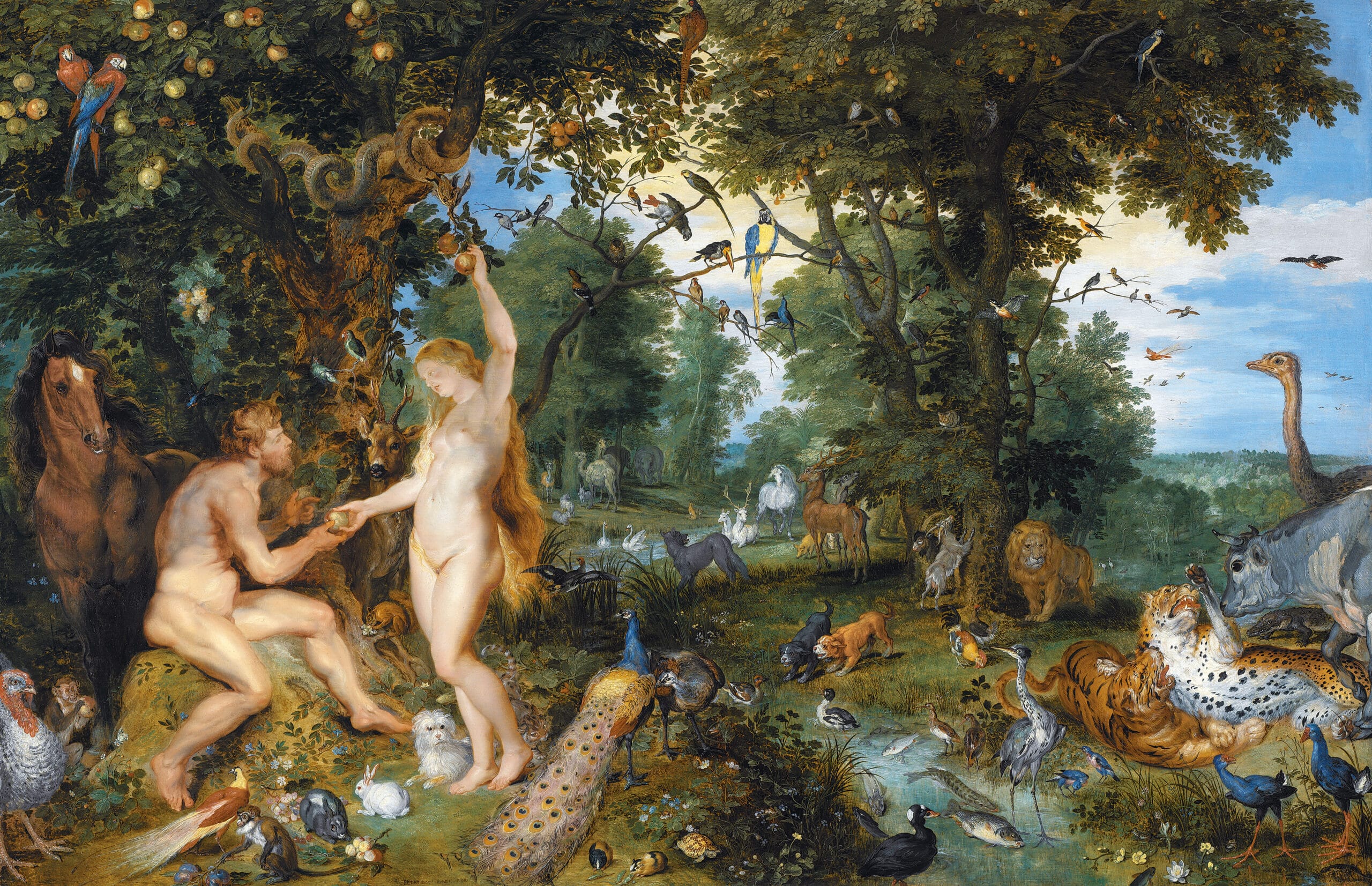
This is from an article online and touches on a number of themes already mentioned. I trust the extended quote might be helpful.
While God alone acts as creator in this artistic and liturgical account, the objects of God’s creation themselves become subjects, actively participating in the emergence of a well-ordered world. For example, rather than simply speaking animals into existence, God assigns this function to the earth: “Let the earth bring forth” (tôßeª haªareß, #Genesis v.24). This assignment does not compromise God’s singular status as the creator. As first to the earth, so God also speaks to the waters: “Let the waters swarm with swarms of living creatures” (v. 20)—but God then creates (baraª) those very creatures (v. 21). The earth and the waters do not co-create with God but, rather, respond to God’s initiative. Creation is alive to God’s purposes and responds immediately to them…
The intra-divine deliberation (“and God said, ‘Let us make humankind [naºå¶eh ªadam]’,” v. 26) sets the creation of humankind apart from the preceding acts and distinguishes humankind from the land animals, the sea creatures, and the birds. In the emergence of these creatures, the earth and the waters acted as created agents; not so with human-kind. … Genesis 1 subverts and redefines royal theology (or ideology) by democratising it, distributing royalty universally, and limiting it severely. No political terrain and no other human beings come within the scope of human-kind’s representatively royal dominion. No conquest will be necessary. Both rule and possession (“subduing”) are with respect to what God has already accomplished, not a charge to conquer and exploit. God’s own concluding estimation, upon inspection of everything created, is “very good” (v. 31). So God could rest and God did rest on the seventh day, sanctifying it (Gen 2:1–4a). The world, the cosmos, is in order, corresponding to God’s intention. God has created a world at peace—thereby creating #peace—with a royal representative designated to keep it, not to achieve it, which God had already done…
Expulsion from the garden, which ensues (3:23–24), counts as punishment to be sure, but Yhwh Elohim takes this action in defence of creation. Unlimited human powers of discrimination, “the knowledge of good and bad,” have already brought creation under threat. Unlimited human life would constitute a further threat to creation and to peace by further assaulting the distinction between divine and human… God’s questions to Cain, “Where is Abel, your brother?” and “What have you done?” (4:9–10), echo and conflate God’s question to the man, “Where are you?” (3:9) and to the woman, “What is this you have done?” (3:13). Cain’s question, “Am I my brother’s keeper?” (4:9) echoes his father’s self-exculpatory “the woman you gave me” (3:12). The culpable acts of the woman and the man in the garden, rendering them naked to each other and before God, led them to hide themselves (3:9–10). Their attempt was as futile as was Cain’s; Abel’s blood cried out from the ground, from the ªådamâ. As punishment, God pronounced Cain “cursed from the ground”—from the ådamâ of which the ªadam and the serpent had been formed, from the ªådamâ God had cursed in 3:17. The transactions in the garden thus had lethal and peace-destroying consequences beyond it. Unlimited discriminatory knowledge—the godlike power to determine good and bad—came to humanity by an act of disobedience that assaulted the distinction between divine and human and threatened creation. Human godlike power to discriminate between good and evil did not carry with it the will to choose the good. Cain’s act, by which he made himself lord over life and death, introduced lethal violence into the world beyond the garden; it violently disturbed the peace…
“The earth was corrupted before God and the earth was filled with violence. God saw the earth, and assuredly, it was corrupted for all flesh had corrupted its way on the earth” (6:11–12). “God saw . . . was corrupted” echoes and reverses “God saw . . . it was good.” Humanity has brought about this reversal. Filling the earth with violence, humanity has rendered the earth distorted and disordered.
Comments on "Genesis – Dominium or Service?"
John Hudson:
This issue was first addressed in modern times in 1967 by Lynn White in his article "The historical roots of our ecologic crisis" which appeared in Science 155(3767) pp. 1203-1207 on 10 March.
Gerald Drewett:
Genesis 1 and 2 reflect two worldviews at different times in the Hebrew story. They don't have to be reconciled with our 21st-century worldview which has the benefit of much more scientific knowledge and has to cater for a world population approaching 9 billion. G1 and G2 belong to history. What matters is that we get our 21st-century worldview/understanding right and act on it.
Add your own comment to "Genesis – Dominium or Service?"
Previous: Why do only some phoenixes seem able to scramble from the flames?
Leave a Reply