

Why do only some phoenixes seem able to scramble from the flames?
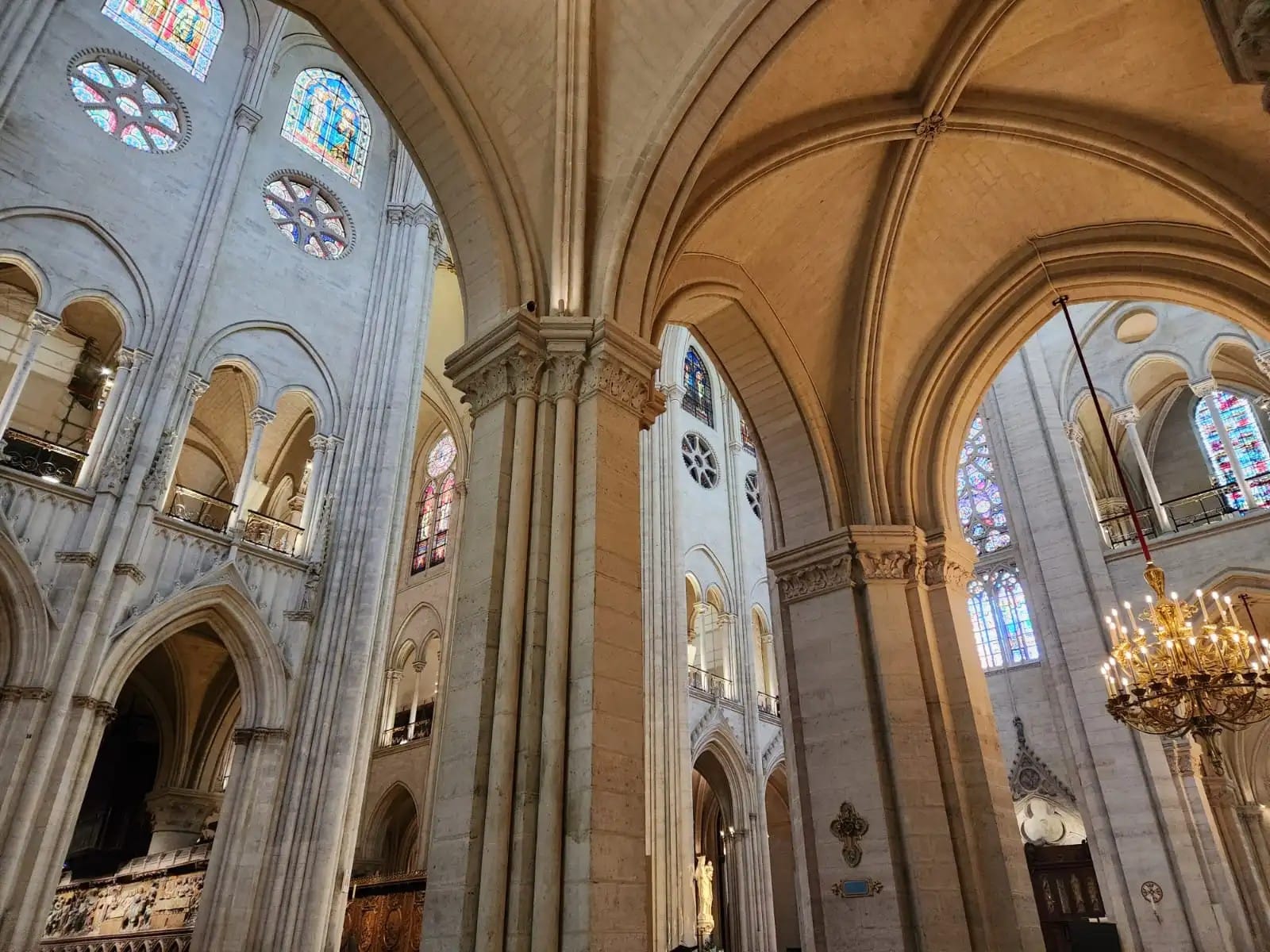
Rob Hopkins reflects on a trip to Notre-Dame.
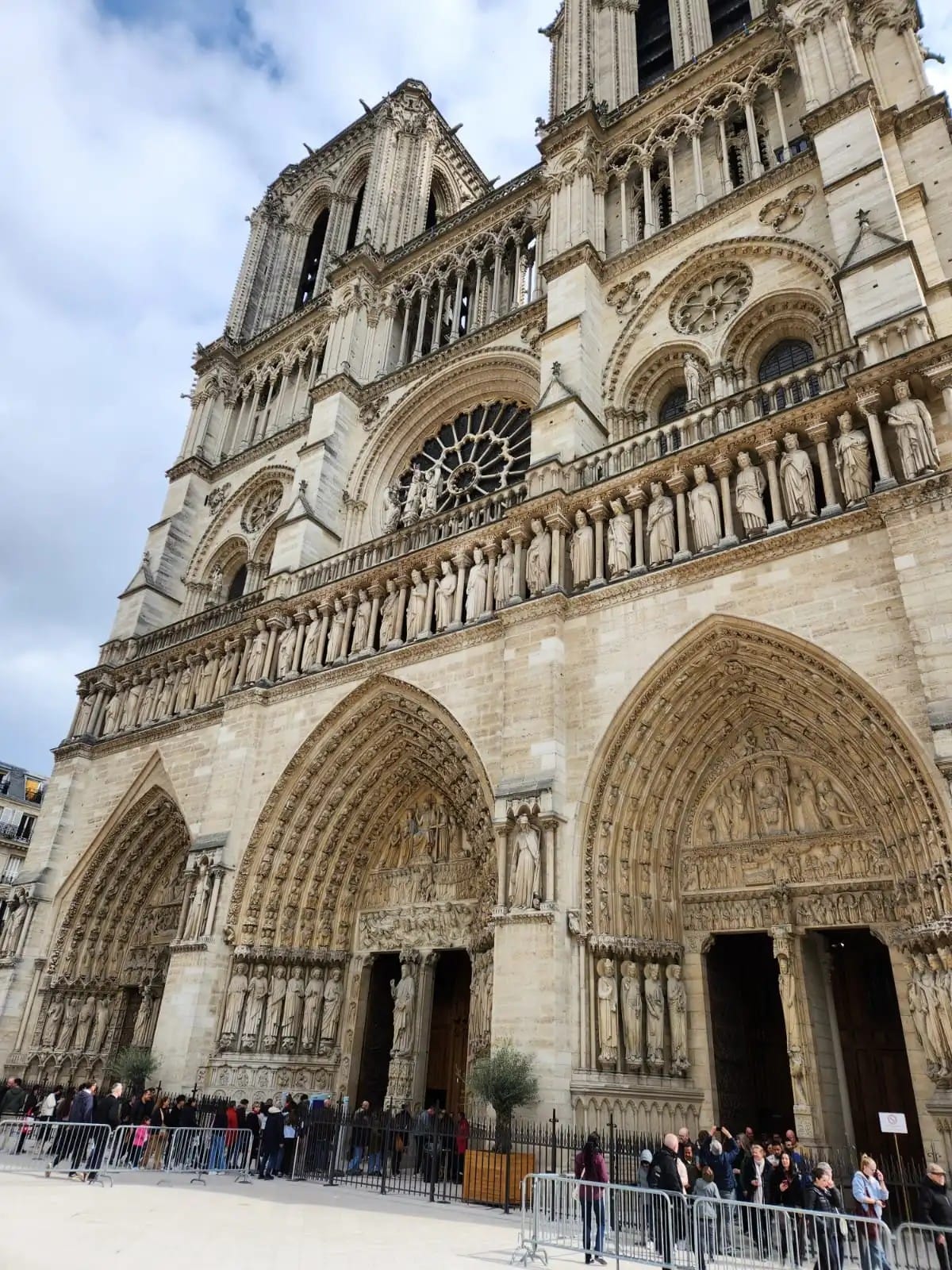
While in Paris last month, I went to visit the newly restored Notre-Dame Cathedral. It was an absolutely stunning experience. After the devastating fire of April 2019, its complete restoration in just 5 years must have seemed an impossible task, but a team of 700 extraordinary artisans, engineers and others did it. Visiting it now, it is said, is the closest we might get to what it felt to visit it when first built, given how clean and new and shiny it all is. It’s breath-taking.
However, as I joined the throngs moving awestruck through its cloisters, the words of Aldo Leopold, author of ‘A Sand County Almanac’ and one of the first people we might call an ecologist, went round in my head: “one of the penalties of an ecological education is that one lives alone in a world of wounds … an ecologist must either harden his shell and make believe that the consequences of science are none of his business, or he must be the doctor who sees the marks of death in a community that believes itself well and does not want to be told otherwise.”
I realised that in spite of the splendour before me I was struggling to enjoy it. I couldn’t help contrasting the extraordinary effort, the rallying of public funds, the skillfully co-ordinated efforts, and opening of wallets that lay behind what I was seeing with the rapidly accelerating climate emergency which seems, sadly, to generate quite the opposite response.
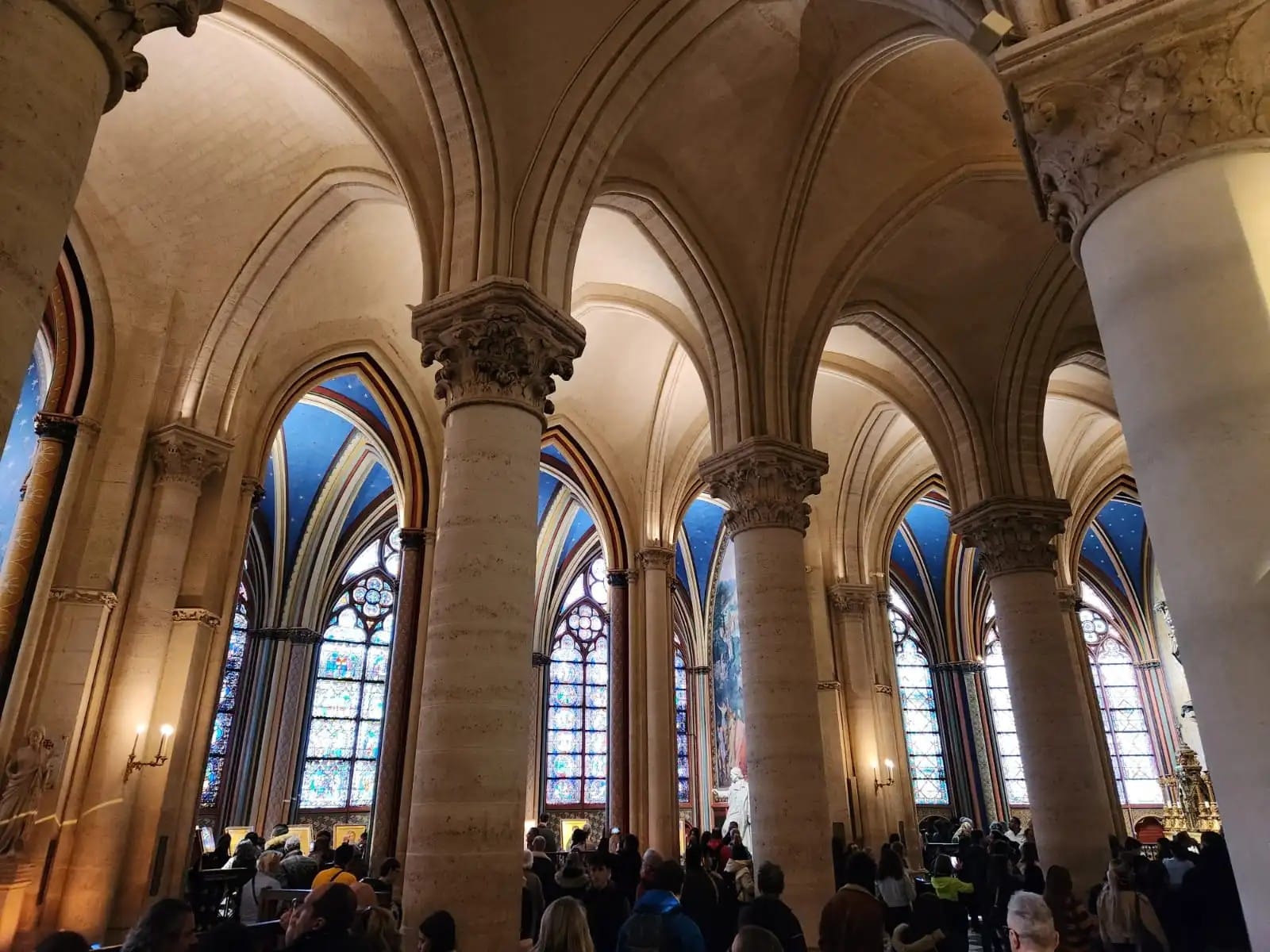
In the days and weeks after the fire, money and political will poured in. President Macron, swept up in a possibly the only actual ‘yes we can’ moment of his presidency, promised to rebuild Notre-Dame in 5 years in time for the Olympics in Paris. Almost €1bn was raised, in small donations from the public and also large donations from billionaires. Bernard Arnault and François Pinault, two of France’s richest men, got into a bidding war to see who could donate the most (without losing sight of the resulting tax break in the case of Arnault). More money was raised than the restoration actually required, with the restoration committee promising, on boards around the outside of the cathedral, that surplus funds will be invested into the Cathedral in different as-yet-unspecified ways. Magnificent though the results undoubtedly are, I couldn’t help feeling resentful. I’ll attempt to explain why.
Around the time cash was pouring in for the restoration of Notre-Dame, I attended an event where Christophe Béchu, France’s Environment Minister, proudly told everyone he had commissioned a study into how France might adapt to a world that had warmed by 4°C. When it was my turn to speak I said that I could save him a huge amount of time and money because there was not a snowball’s chance in hell (a word I use the word ‘hell’ advisably) that France could adapt to a 4°C warmed world. Why, I ruminated, was it felt to be ‘pragmatic’ to plan for 4°C rather than do everything imaginable to avoid that? Could it actually be true that we find it easier to imagine the end of the world than the end of capitalism?
Perhaps my Grinch-like demeanour in those cathedral aisles could be attributed to the fact that the day before I had sat in the brilliant ChangeNOW summit in the Grand Palais in Paris listening to Indy Johar of Dark Matter Labs. In his searing presentation, he set out the scale of what the climate and ecological emergency actually means. He set out that, barring extraordinary action, we look set for a 3°C rise in global temperatures by 2100. This doesn’t mean a uniform increase, rather it will mean a 5°C on land, and spikes of as much as 8°C, especially in cities.
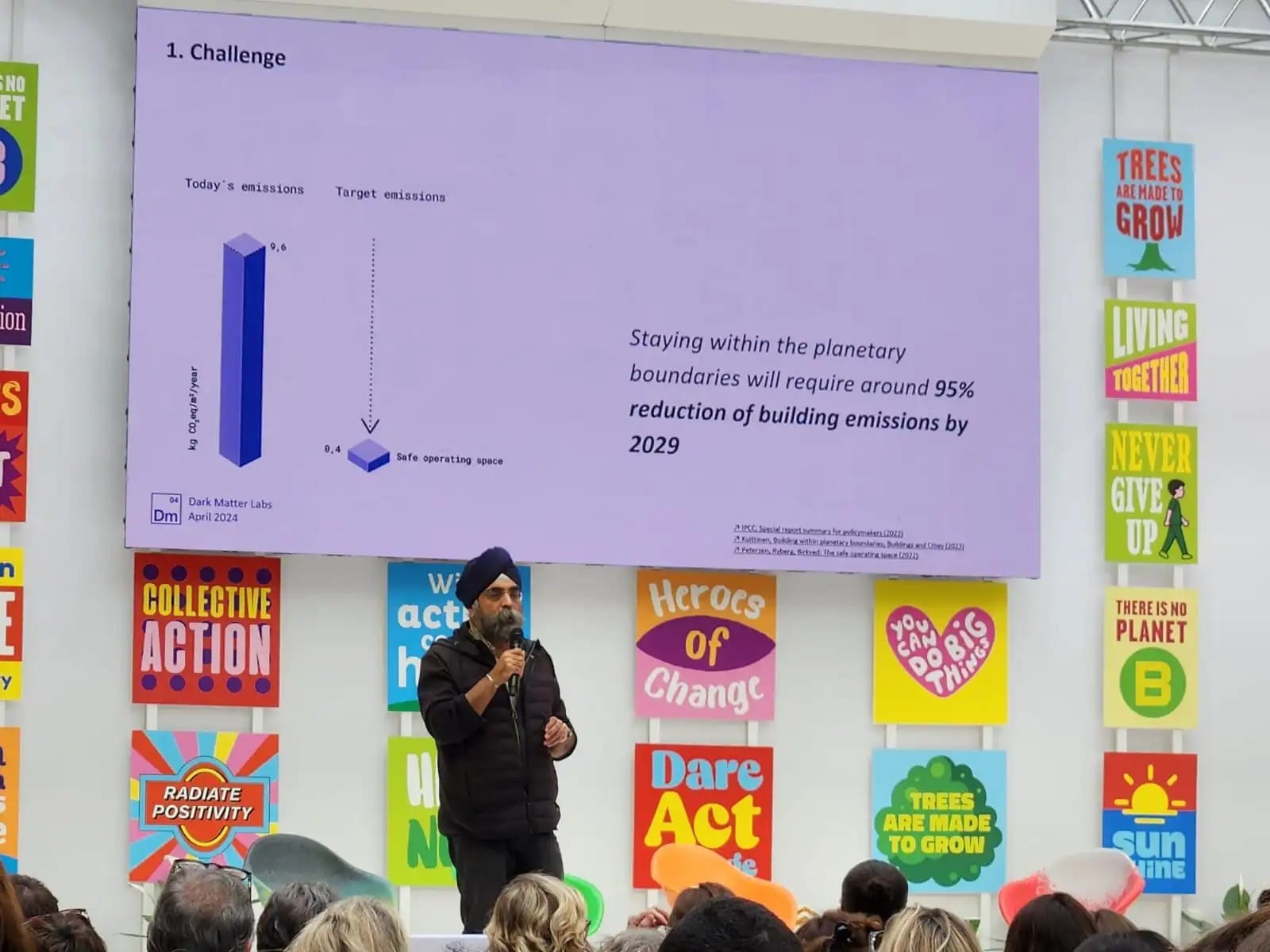
Focusing on the built environment, he said that staying within planetary boundaries will require around a 95% reduction in building emissions by 2029. He showed that many of the ‘exemplar’ green building projects are still nowhere near where we need to be. Denmark, the country most celebrated for its ‘circular economy’ in the construction sector, and home to many highly innovative projects, has only achieved 4% circularity, and we need to get beyond 90%, and soon.
Indy went on to talk about what the built environment sector would need to look like if it was responding to the climate emergency in a proportionate way. It was sobering, and made a nonsense of the presentations that followed, which now seemed unambitious and tokenistic.
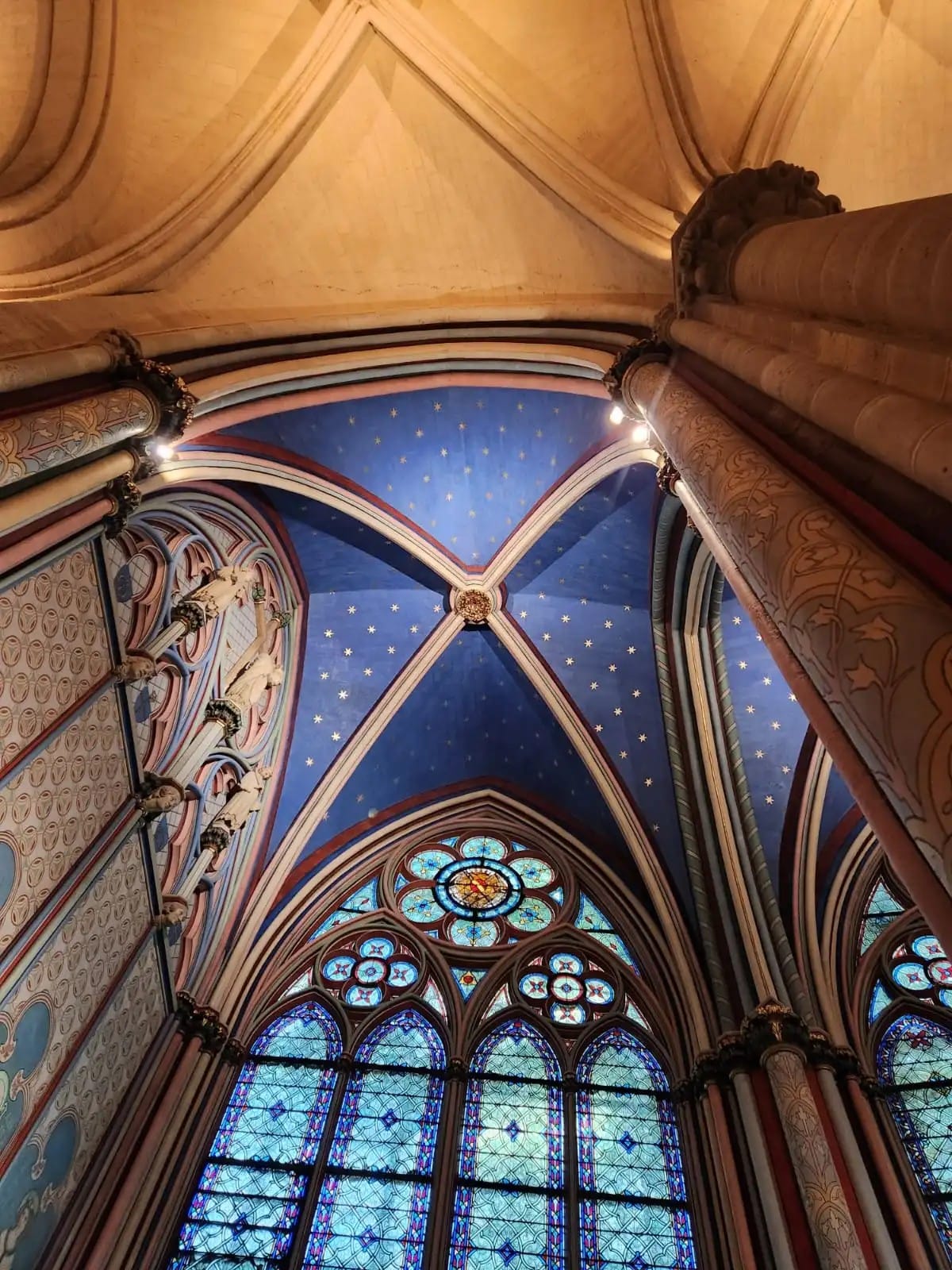
The following day, staring up at the exquisite stained glass windows and carved stone columns, I was struck by how much of what I was seeing was trying to mimic how beautiful the natural world is, and not even coming close. Cold stone and glass are no match for light shining through the new spring leaves of a real forest, for the astonishingly complex universe of the soil beneath our feet, for our home planet’s dazzling biodiversity. A cathedral like Notre-Dame is surely a celebration of the miracle of Creation, but Creation itself is always going to be more extraordinary than any cathedral ever could be. And that ravishing but much-depleted Creation is under the gravest of threats right now.
I wondered, as I craned my neck up to the recently reconstructed vaulted ceiling, how it might have been if, and here’s a provocative question for you, following the fire, the Church had said that actually it was going to leave the burnt-out Notre-Dame, and not restore it, until the French government reacted to the climate emergency with the urgency it deserves? What if they had argued that Notre-Dame would remain as a highly visible scar, a parable for what will befall the rest of creation unless urgent action is taken? Would the billionaires have stepped up to help out then?
I found a taste of this in the story of King’s College Chapel in Cambridge who installed 438 panels on their 500-year-old roof. The local bishop was quoted as saying “we believe as Christians that the world is God’s gift. We are called on as Christians to steward that gift”. The world as God’s gift. How much further could we take that idea?
Church leaders, in the radical spirit of the Pope’s ‘Laudate Si’, could have used the moment to make clear that all of Creation matters so much more than one example of it, however exquisite. Imagine the power of such a stance. It would have been an audacious gesture appropriate to the scale of where we are right now, similar to when, in one of my ‘How to Fall in Love with the Future’ workshops in Paris with an audience of Museum directors from around the world, someone from the Louvre suggested maybe they should sell the Mona Lisa and use the money for climate projects. That’s what a step towards what the scale of urgency and ambition required looks like.
Interviewed by the BBC around the time the restoration work started, Alan Davies, an architect specialising in conservation of old buildings, said “it costs whatever it costs… there can’t be any cutting corners … the amount of money that people have pledged is a reflection of the way people feel about historic buildings as fixed points in the landscape”. But a cathedral as a ‘fixed point in the landscape’ is of little use if that landscape is experiencing the ravages of out-of-control climate change. Or if it’s on fire. Or under water. Or if its agriculture has failed and people have been forced to realise that they can’t eat money. There is, one might say, ‘No Faith On A Dead Planet’.
Last month, the UK Climate Change Committee (CCC) published a paper showing that the cost of decarbonising the UK economy would be £4bn a year. That might sound like a lot (although you might now think of it as being just under 5 restored Notre-Dames) but remember that the repair bill after the appalling flooding catastrophe in Valencia in 2025 looks set to exceed £15 billion, for just one single climate-related disaster. The CCC argued that every energy price spike, like we saw in 2022 and like we’re seeing now, costs as much as the entire cost of decarbonising the UK between now and 2050. And now the oil and gas crisis triggered by the blockage of the Strait of Hormuz is, according to Fatih Birol of the International Energy Agency, “more serious than the ones in 1973, 1979 and 2022 together”. Fossil fuels are killing us, yet still so many people struggle to see our dependency on it as a huge vulnerability.
And remember that in 2022 alone, the net income of publicly listed oil and gas companies exceeded £690 billion. We seem able to find money for wars (the current insane assault on Iran cost $16 billion in its first 6 days alone), but not for protecting the very creation Notre-Dame was built to exalt. We find it easier to wage wars to protect oil and gas than to move with the same level of urgency, resources and focus to end our dependency on oil and gas.
So I want to finish with a suggestion. How about the bodies responsible for dispensing the remaining Notre-Dame funds, such as Fondation du Patrimonie and Fondation Notre-Dame, rather than scrabbling around for ways to enhance what is already an incredible achievement, transform themselves into a Restoring Creation Fund, a fund that shows the kind of ambition and urgency so lacking at national government level. It could use that roughly £110 million surplus to fund projects that demonstrate the kind of ambition Indy Johar had described.
It could fund renewable energy projects, insulation schemes, rewilding, whatever. And it could go back to the public and the billionaires and ask them to show the same level of urgency in terms of their support for the Restoring Creation Fund. The fund would work with the principle that “it costs whatever it costs” because, after all, “there can’t be any cutting corners”. Perhaps it might tell a story powerful enough that it begins to centre Creation in the same way the people who built Notre-Dame in first place were hoping it would.
Rob Hopkins is the co-founder of Transition Network and of Transition Town Totnes, and author of several books including ‘The Transition Handbook‘ and most recently, ‘How to Fall in Love with the Future: a time traveller’s guide to changing the world’. This article was first published on 9 April 2026 on Rob’s blog, robhopkins.net.
Comments on "Why do only some phoenixes seem able to scramble from the flames?"
Daniel Button:
Great article, so sad and so true. We have such a short-sighted view of money, greed, wealth and mixed up priorities.
Add your own comment to "Why do only some phoenixes seem able to scramble from the flames?"
Next: Genesis – Dominium or Service?
Previous: Spiritual Adaptation
Leave a Reply