

Press Release – Churches’ Unethical Food Practices Need Addressing, Says Green Christian
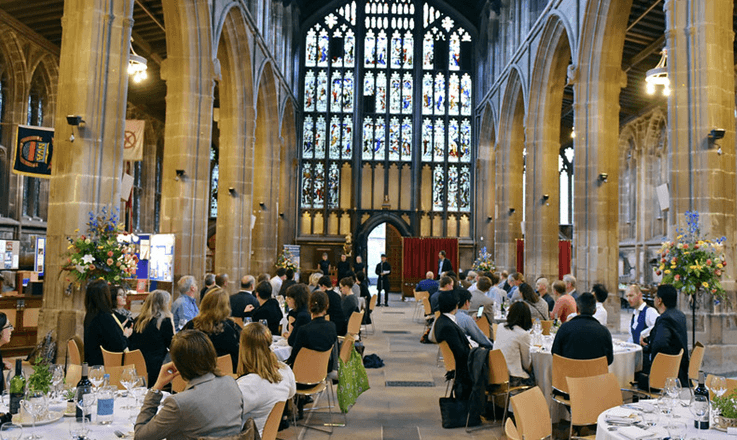
Many churches are not addressing the ethical implications of food, according to the latest findings released from a survey of over 600 regular churchgoers in the UK.
The survey explored the range of contexts in which churches serve food, the production of which is commonly blamed for a decline in species, river pollution and climate change, concern about animal welfare, and terms of trade that harm the poor.
Asked whether their local church takes ethical issues into account when food or drink is served at events, only a small proportion of survey respondents (12%) indicated that it did so ‘always’, while just over a third (35%) replied ‘sometimes, depending on cost, convenience and / or who is planning the meal.’ More than one half replied ‘no’ (22%) or ‘don’t know’ (31%), suggesting a lack of ethical commitment, knowledge, or both.
The survey revealed the extent of food-related activities in the life of churches, highlighting a missed opportunity for demonstrating ethical practices that would protect the environment and help the poor.
Most respondents (93%) indicated that their church serves refreshments after its main Sunday service (39% ‘always’, 28% ‘often’), while 86% reported that they ‘often’ or ‘sometimes’ serve food at events such as baptisms, weddings and other celebrations, fairs and fêtes, jumble sales, or Harvest suppers. Food is also integrated into church life through ‘bring and share’ lunches and meals for the elderly (reported by 39% and 37% of respondents, respectively), men’s breakfasts, and meals for home groups, Alpha groups and students. The provision of snacks and sweet is especially common (42%).
In addition, many churches are involved in community projects such as food banks (reported by 67% of respondents) and soup kitchens, while a small proportion sell food, such as Fairtrade items, or run projects that involve growing food.
Tim Cooper, Emeritus Professor of Sustainable Design and Consumption at Nottingham Trent University and a Trustee of Green Christian, who led the research, expressed concern at the findings:
“Our survey confirms the important role of food in the life of churches, whether refreshments after services, celebratory events, or supporting the poor and needy. Sadly, it found that too few churches address ethical concerns about the food system in these ministries. It is time for every local church to develop and apply an ethical food policy.
There may be different outcomes when churches and churchgoers discuss food. Some will favour plant-based diets to address climate change, while others may prefer to focus on organic produce or animal welfare. But complexity does not justify disregarding these important concerns. Nor does cost. Although we recognise genuine economic constraints, too often cost is used as an excuse not to make more ethical purchases.”
Many churches still do not choose Fairtrade products, even though Traidcraft tea and coffee was common in churches long before being widely available in supermarkets. Asked about whether specific types of food and drink considered ethical are normally served in their church, 46% of survey participants responded Fairtrade tea / coffee and 33% Fairtrade food (e.g. chocolate, bananas, biscuits). Given growing public interest in ‘plant-based diets’, surprisingly few respondents, 25%, indicated that vegetarian and/or vegan options are normally provided, and the proportions identifying locally sourced food (i.e. produced by local farmers/food companies) (29%), free range eggs (16%), and organic food or drink (12%) were similarly small.
Less than a quarter (24%) of respondents said that their church had considered using Fairtrade or organic wine (or grape juice) for a Holy Communion/Eucharist service (although, predictably, over one-half did not know). More than a third (36%) said that their church had not considered whether food bank items should healthy and nutritious, produced locally, and organic or Fairtrade, and a further 19% only ‘to a limited degree.’
“Despite the lack of engagement from many churches”, Professor Cooper added, “there are signs of hope. Thousands of local churches are registered with the Eco Church initiative, which encourages them to apply the LOAF principles promoted by Green Christian – food which is Locally produced, Organically grown, Animal friendly and Fairly traded.”
The survey revealed significant variation in food-related activities between different types of church. Events at which food is served are especially common in Church of England churches. A relatively high proportion of Roman Catholic survey respondents indicated their churches ‘rarely’ or ‘never’ served refreshments after services, did not serve food at events and, when they did, were least likely to take ethical issues into account. Pentecostal churches were most likely to provide snacks and sweets.
Food served in churches is often purchased by individual church members and some is prepared in their homes. The final findings from the survey, exploring the food choices made by churchgoers in their daily lives, will be released next month.
Notes:
- Green Christian is a charity formed in 1981 to offer insights into ecology and the environment to Christian people and churches, and Christian insights to the Green movement. It provides resources, campaigns and events to help people relate environmental issues with their faith.
- The research was designed to understand food practices among Christians and within churches. A questionnaire was completed by 605 respondents who described themselves as Christians and had attended a church service at least once a month, on average, during the previous year.
- The survey sample was representative of regular churchgoers by age, gender, and type of church attended: Church of England, Roman Catholic, Baptist, Methodist, Pentecostal (e.g. Assemblies of God, Elim), Independent (e.g. FIEC), Presbyterian, New Church (e.g. Newfrontiers, Vineyard), Black Majority Church (e.g. New Testament Assembly, NTCOG, RCCG, Kingsway, ARC Network, Ruach), other Anglican, Brethren, Orthodox, United Reformed Church, Salvation Army, Quaker.
- A coalition of the UK’s major church denominations and Christian organisations, including Green Christian, is calling on churches to host community screenings of the newly-released People’s Emergency Briefing film on climate change and nature loss. Addressing food security in the film, Professor Paul Behrens of the University of Oxford says “We must shift to healthy, plant-rich diets, cut waste, improve production and make our farming methods more resilient.”
- Experts in sustainable or ethical food point to the potential environmental benefits and social benefits of using Locally sourced food (to reduce carbon-emitting transportation and support the farming community), food produced using Organic or regenerative methods (to support biodiversity), food that has not involved cruelty to Animals (ideally outdoor reared and free range) and Fairly traded (thereby supporting poor workers who supply food and drinks to us).
Comments on "Press Release – Churches’ Unethical Food Practices Need Addressing, Says Green Christian"
Fiona Jackson:
I found out about this in the email newsletter from my former parish in and I was suprised, because since the(former)Traidcraft rep became infirm there has been nobody to promote fair trade and ethical products with her passion. So I wouldn't expect it to be flagged in the newsletter at all. I was on the coffee rota(after 2 masses) and some of us old guard tried to keep it up but we always found that refreshements provided at other events were not fair trade or ethical, despite the fact that the church had been designated a Fairtrade church in the 90s. When the people with passion are no longer in the parish things can slide. I moved away in November 2024 but a year or so prior to this I wrote to the Archdiocese of Southwark(twice) and got no reply. People at all levels in the parish seemed oblivious at that time. In my husband's URC church they used Traidcraft products but when the rep died there was a dwindling to some extent and certainly the passion. His current URC church is pretty good and has a person who promotes Transform Trade. In addition, the Anglican Parish Church in Byfleet where a relative lives, has a churchyard that promotes wildlife - I've seen this once and would like to go back to understand more, in order to pass this on to other churches I know. I have no idea if the Catholic Church where I now live is Fairtade (I knew when moving to this small Kent town I'd have issues with this particular church so I don't attend it)but I'd be surprised if it was more than just tea and coffee.
teknologi informasi:
A very important report. The LOAF (Locally produced, Organically grown, Animal friendly, Fairly traded) principles should not be merely optional, but a reflection of faith in action. It is shocking to see the low percentage of local and organic produce consumption, even though churches have great potential to support local farmers and environmental sustainability.
Add your own comment to "Press Release – Churches’ Unethical Food Practices Need Addressing, Says Green Christian"
Next: Major UK Churches and Christian Organisations Unite to Launch a Call to Action on Climate and Nature
Previous: Press Release: Children Buzz to Parliament to Demand a Law to Protect Nature
Leave a Reply