

Responding to Nationalism: Reconciliation or Resistance?
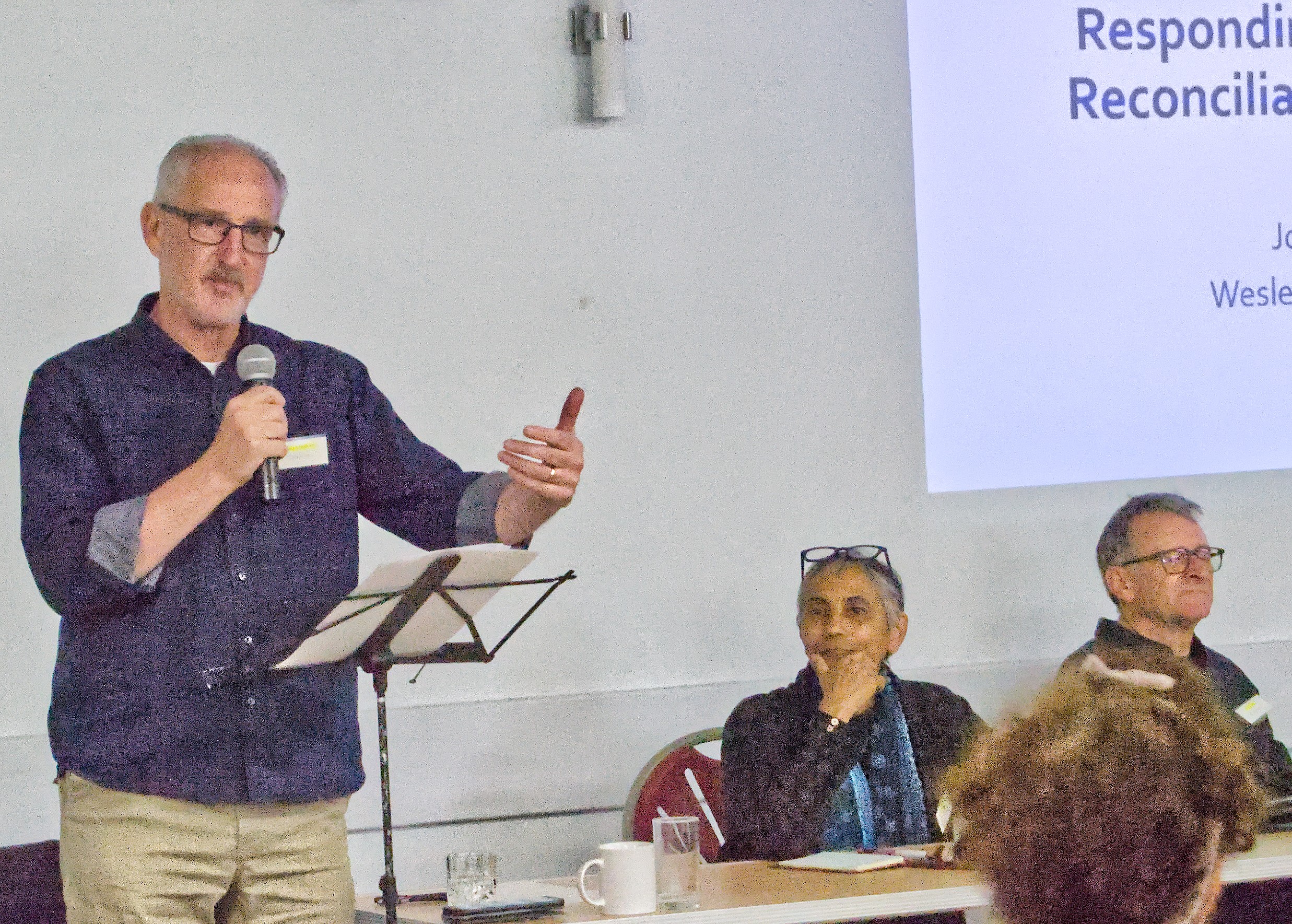
Our Annual Members Meeting and Conference 2026
The implications of Christian Nationalism for churches and their environmental witness. This was the title of the talk given by guest speaker Dr Jonathan Chaplin, a fellow of Wesley House, at the Annual Members Meeting of Green Christian, held at St Aloysius Church, Euston on Saturday 10 October 2026.
In the Annual Members Meeting in the morning, chaired by Green Christian Chair, George Dow, representatives of the various areas of Green Christian’s work reported on the activities of their teams. The Annual Report can be seen here.
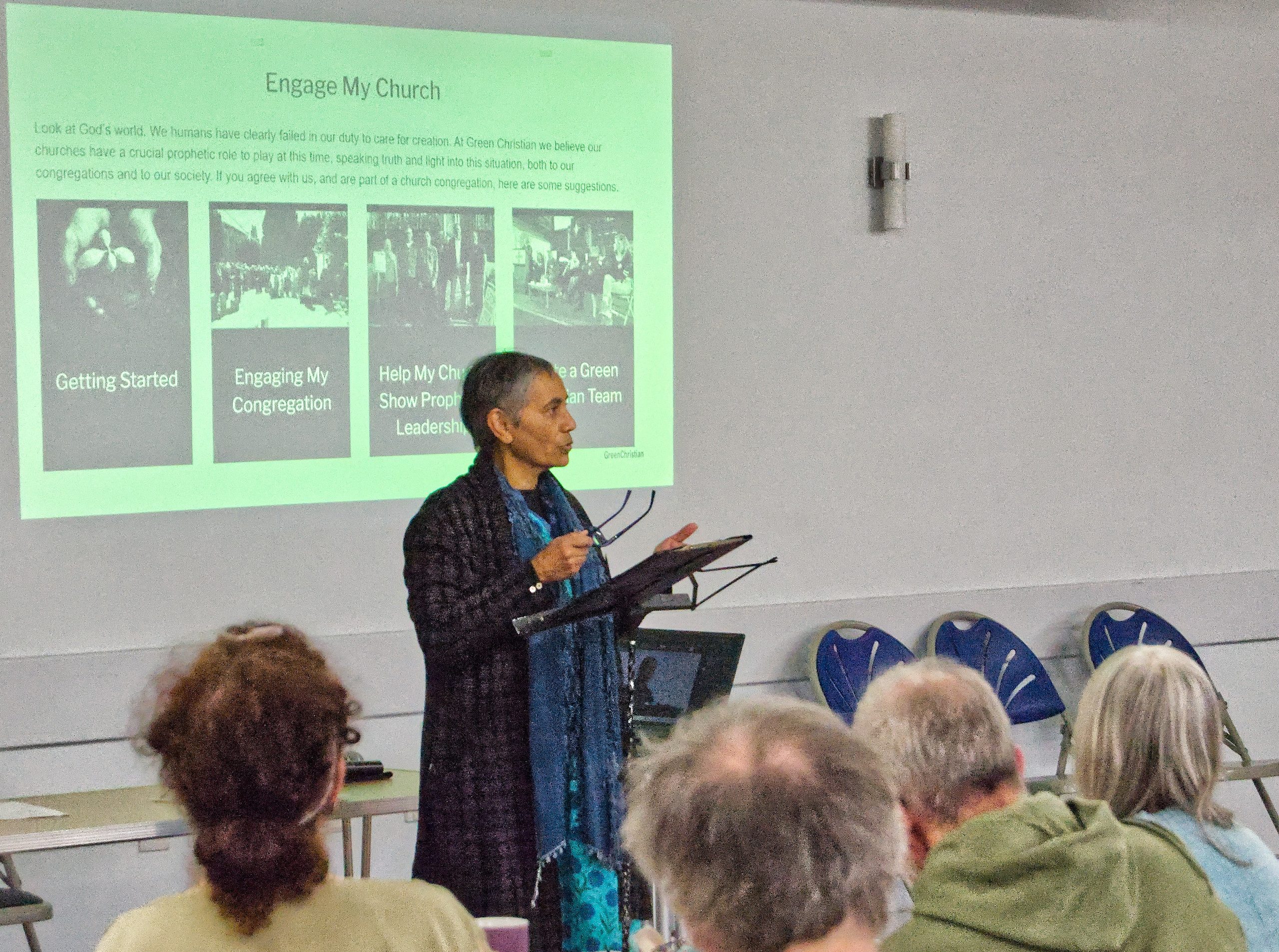
Melanie Nazareth of the Churches Project Group told of the new Church Resilience project being prepared, and invited members to ask their own churches to try out the draft of this project. She also commented on how many churches had held a showing of The Peoples Emergency Briefing film and urged people to use the resources prepared by Green Christian on this topic.
Howard of the Printed Media Group invited participants to take away sets of leaflets and magazines to use and display at their own churches.
Colin Andrews of the Communications Group ran his laptop during the event to enable the morning AMM to be attended by members on Zoom.
Liddy Buswell, our Digital Media Officer, now working one day a week for Green Christian, took photographs during the event and was pleased to meet board members and ordinary members.
Attendees chatted over a scrumptious bring-and-share vegetarian, LOAF lunch.
Dr Chaplin gave his information-filled talk.
Cathy Fish found the following thoughts stayed with her:
“The distinction between ‘nation’ and ‘state’, allows us to understand the influence of faith(s) on state. ‘Nation’ has fewer borders and legislative boundaries than ‘state’. ‘Nation’ is about cultural, historical and social identity. ‘State’ is political and legal entity with defined territory.
He then talked about five positions on a spectrum of relationship between faith and state – those positions being fluid. The first three of these do not amount to Christian Nationalism, he said, and those are, in increasing strength of influence of Christian faith on state: faith based cultural influence, pluralist faith based politics and soft Christian privilege. The next two are hard Christian privilege (which is the position of some members of the Reform party professing a Christian faith, he said) and Christian ethno-nationalism.
He said that the Green movement responds to this, and counters the more extreme positions, by being inclusive, prioritising environmental concerns for the common good, being outward looking and working cross-culturally.”
Clare Redfern noted the following:
“It was helpful to hear Jonathan’s definition of Christian Nationalism: the use of state power to promote a vision of a Christian nation above other visions. This would play out as other faiths being tolerated, but not given equal standing (e.g. no funding for Muslim schools or allowing public expressions of other faiths, as is currently done).
One point made was that there are actually not that many practising Christians in Christian Nationalism. For ethno-nationalists, the label is more an affirmation of heritage and British/English ethnicity (the 11 October Theos report backs this up). Having said that, Christian Nationalists are turning up at churches and so there is potentially opportunity to engage. How can we do that in a positive and empathic way? That was what some of the discussion after lunch looked at.
Positive ways we can respond as Green Christians is that a nation with ‘green’ policies will be outward facing and internationalist in thinking, finding identity through practising justice and concerned for the good of all nations. Another important point was that the things with positive environmental benefits that we care about: clean air; clean streets, jobs in renewable energy – are good things that everyone is wanting whatever their political persuasion.”
Judith Allinson said:
“My knowledge of Far-Right Parties before this meeting was extremely limited: What I write below is a combination of what I remember from the lecture and what I have searched for on the internet.
Far Right parties tend to be anti-immigrant, anti foreign, anti Muslim, favouring selfish policies. But there are several different far right parties, so they don’t all have the same policies. People have heard about Christian Nationalism because some of the far right parties have adopted a form of Christianity partly because it was the main religion of British people in the recent past. There are several different far right parties and they have different views on different aspects of the environment. Some are climate change sceptics; some are anti net-zero. (Just do a search using AI and you will see how complex it is. We should be concerned that some groups are using “their version of Christianity” and “Christian” jargon to further their aims.”
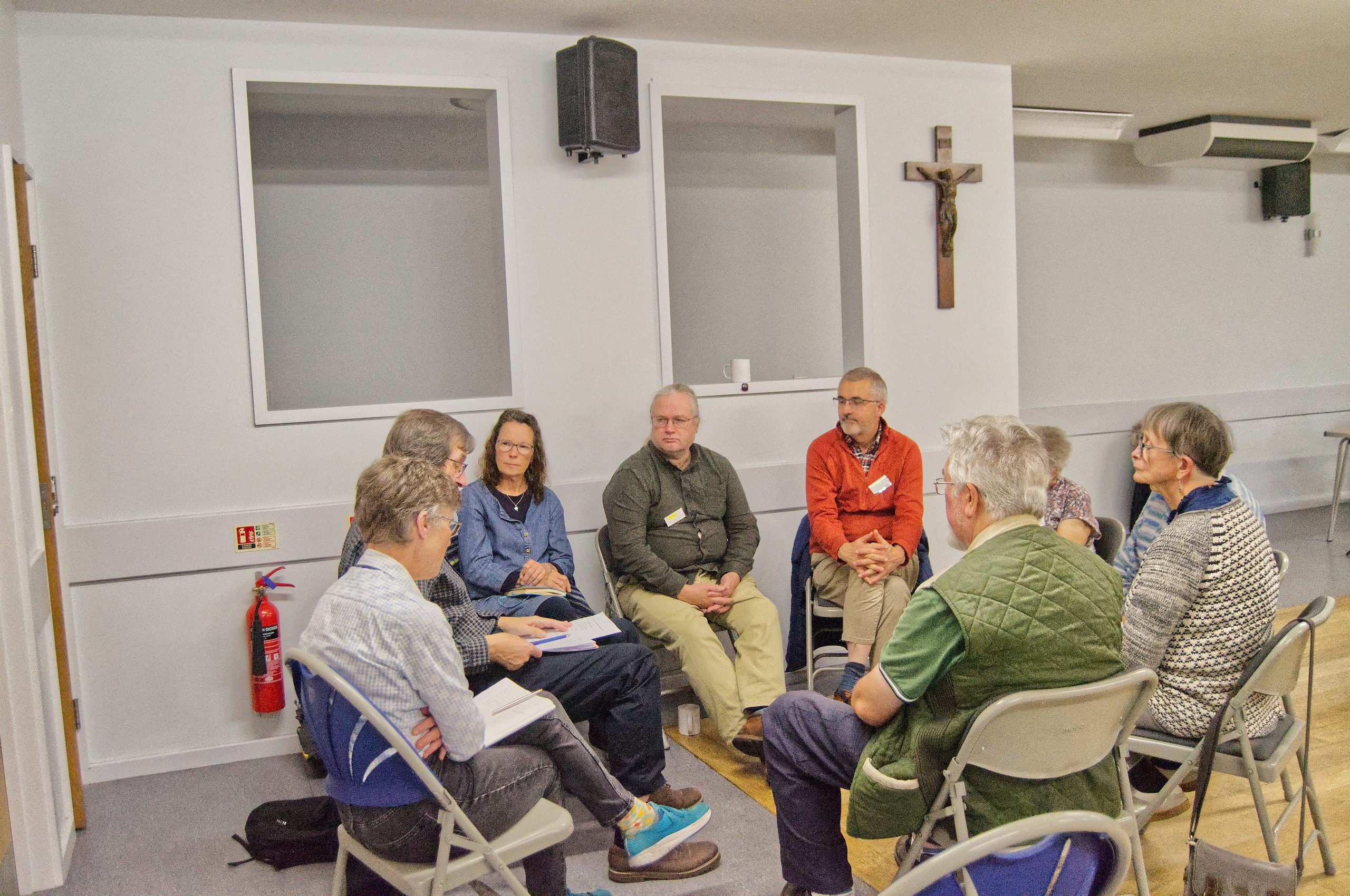
Five discussion groups were led focussing slightly different aspects of his talk.
Paul Bodenham summed up the meeting’s response the the Conference’s question – Responding to nationalism: Reconciliation or resistance?
- Develop empathy (e.g. with those who feel culturally excluded) as a strategy for change (NB change may be in us too!) – not something environmentalists have had to do before
- Foster engagement, and not just judgement, towards those who disagree with us – particularly within our own churches
- Recover local self-reliance (e.g. bioregionalism) as a positive form of patriotism, but resist it being coopted for exclusionary purposes
Comments on "Responding to Nationalism: Reconciliation or Resistance?"
No comments found.Add your own comment to "Responding to Nationalism: Reconciliation or Resistance?"
Previous: Greenbelt 2026
Leave a Reply