

Literature as a Lens for Climate Change – Book Review
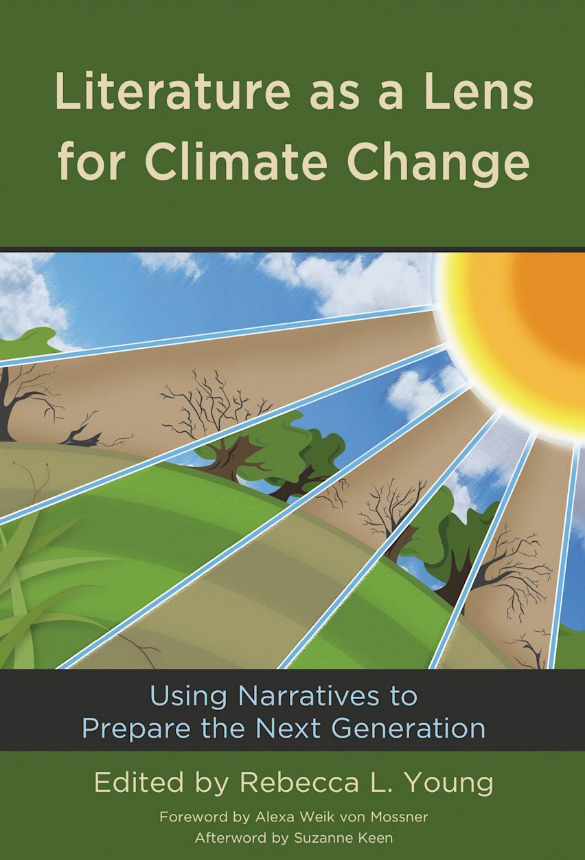
Literature as a Lens for Climate Change: Using narratives to prepare the next generation, Rebecca L Young (editor), March 2024. Lexington Books, ISBN 9781498594134, 270 pages. No UK RRP
As a counsellor in a secondary school I started asking my young clients whether they worried about climate change. I found they were generally well informed. For some of them any eco-anxiety was crowded out by what was happening in their family lives, or on their social media. But for most of them the expectation of global breakdown was simply part of the awful legacy left them by their parents’ generation and which they now somehow had to live with. It was clearly seriously depressing.
If you teach English Literature and sense the urgency of engaging young people with the climate and nature crisis, but in a way that is supportive, this is a book to read. Recommend it to any educationalists in your family or among your friends. Rebecca Young has gathered together nine essays written by English teachers, including university professors and those teaching students in high schools or colleges. Before teaching herself, Young undertook doctoral research into how literature can be a lens for climate literacy. Her first book was Confronting Climate Crises through Education: Reading Our Way Forward. This, her second book, focuses on how story-telling can effectively engage students, particularly at the 17-18 year old stage, so as to deepen their awareness and capacity to discern positive ways to relate to the global crises.
In her introduction Young poses two questions:
“1. How do we provide context to make scientific data feel personally and culturally relevant?
2. To what extent can we promote a learning environment that transforms apathy and hopelessness into engaged, prosocial action?”
Each of the chapters shows in a different way how literature can offer that kind of learning experience. My personal favourite was Chapter Seven, contributed by Lorraine Kerslake and Maria Encarnación Carrillo-Garcia, who teach in two different Spanish universities. They collaborated in a project to support their students through reading and writing haiku poetry. These short poems, often with a powerful emotional charge, opened up what they describe as “an unforgettable classroom experience … fomenting environmental awareness … nurturing a sense of wonder (to) carry forward into the future and affect the ecological wellbeing of our students and of future generations, moving beyond the present crisis toward a more sustainable way of living with the Earth”.
The contributors to Rebecca Young’s book draw in experiences from North America, Spain, Australia, South Africa and India, which make this a rich collection. Their insights demonstrate a universal validity easily transferable to the challenges and opportunities found in our own schools and colleges here in the UK. Rightly we worry about the psychological wellbeing of our young people. Here is a key way to support them in facing the hard realities through inspiring the imagination to find the best ways ahead.
Andrew Norman
Green Christian Chaplain
Comments on "Literature as a Lens for Climate Change – Book Review"
No comments found.Add your own comment to "Literature as a Lens for Climate Change – Book Review"
Previous: The Response – Book Review
Leave a Reply